

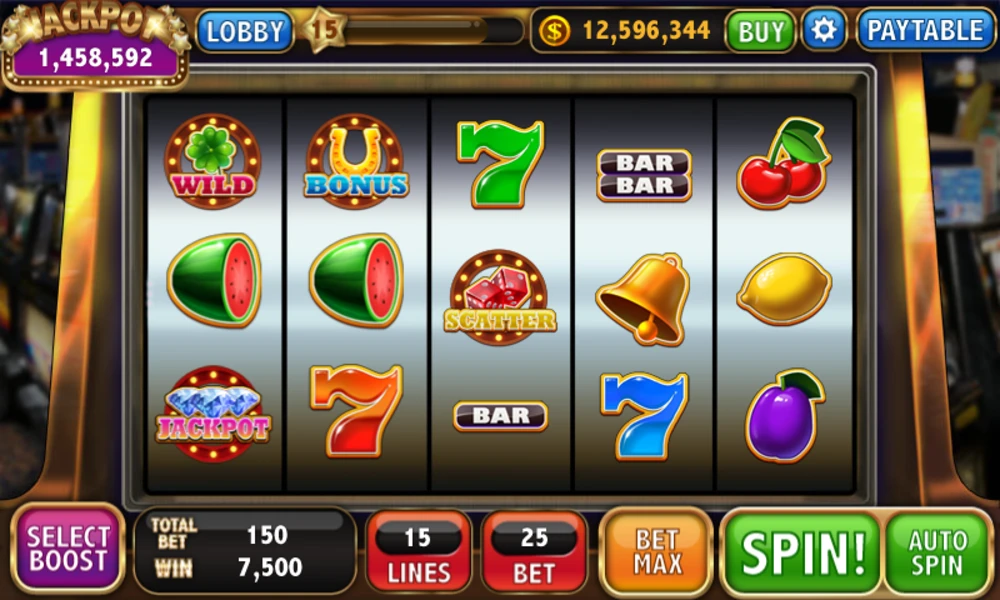
Near-miss patterns display outcomes appearing tantalizingly close to winning combinations without actually qualifying for payouts. These visual scenarios show matching symbols adjacent to paylines or scatters landing one position away from triggering requirements. Reel strip layouts sometimes produce almost-win sequences as part of standard gameplay, click here for more info. The patterns emerge naturally from mathematical frameworks where visible positions exceed active payline areas. Two matching jackpot symbols on a payline with a third appearing directly above or below create classic near-miss visuals.
Symbol positioning mechanics
Reel strips contain predetermined symbol sequences determining which icons appear at various stopping positions. Each reel position corresponds to specific symbols arranged in fixed orders along virtual strips. When reels stop, display windows show small segments of these longer strips, typically three consecutive symbols per reel. The window positioning determines which strip segments become visible, regardless of whether displayed symbols align with active paylines. A reel might stop showing positions 45, 46, and 47 from its symbol strip. If position 46 sits on the centre payline while positions 45 and 47 appear above and below, all three become visible despite only the centre position participating in most payline evaluations.
Strip construction principles
Virtual reel strips typically contain 50-200 symbol positions depending on game design and mathematical requirements. High-value symbols appear sparingly throughout these strips, separated by numerous lower-value icons and blanks. A jackpot symbol can occupy 2-3 positions across a 100-position strip. When reels stop at random positions, the three-symbol display windows often show high-value symbols in visible but non-winning positions. Two consecutive strip positions might both contain jackpot symbols. If a reel stops displaying these positions with one on-payline and another above or below, a near-miss visual results despite both outcomes being legitimately random.
Display window configurations
Three-row display windows show more symbol positions than most payline structures actually evaluate for winning combinations. Standard single-payline games evaluate only centre-row symbols while displaying full three-row grids. Multi-payline games activate specific patterns among visible positions, leaving others observable but inactive. This visibility-versus-evaluation discrepancy creates frequent near-miss scenarios where matching symbols appear in visible positions outside active payline paths. A horizontal payline evaluating top-row symbols ignores identical matches appearing in middle or bottom rows one position away.
Timing and animation
Reel-stopping sequences contribute to near-miss perception through progressive halting, where reels stop sequentially rather than simultaneously. Left reels stop first, displaying their symbols before the right reels conclude. When early reels show matching high-value symbols, anticipation builds while the remaining reels spin. Final reels stop with matching symbols appearing just off-payline, creating dramatic near-miss moments. The sequential revelation amplifies near-miss awareness compared to simultaneous stopping, where all positions appear instantly. Animation speeds affect near-miss prominence; slower stops provide extended viewing of developing patterns, including near-matches.
Random outcome foundations
Near-miss patterns emerge from genuinely random outcomes rather than programmed near-win generation. Random number generators determine reel stopping positions without considering previous results or near-miss frequencies. The mathematical probability of landing one position away from winning combinations naturally produces regular near-miss observations. Symbol distribution across reel strips combined with display window sizes mathematically ensures frequent near-match scenarios through pure randomness.
Near-miss patterns result from symbol positioning, strip construction, display windows, animation sequences, and random outcome mathematics. The visual presentations emerge naturally from game design rather than being programmed near-win generation.
